Brand:

AtomRC Swordfish RTH FPV Aircraft

No reviews yet Leave the first review

266,44 €

The product is in our warehouse! Delivery time after order up to 5 working days.

Изчерпан

Would you like us to notify you? We will inform you when the product becomes available. Please leave your valid email address.
Код: RR-AtmRcSwordRTH

AtomRC Swordfish RTH FPV Aircraft

AtomRC Swordfish is a 1200mm wingspan airplane suitable mainly for longer flights. The airplane is made of EPP material reinforced with carbon. The EPP material is very durable and can be easily glued together in case of damage. In the middle section there is enough space for location of the flight controller, receiver and other accessories. In the front, under the black EPP cover, there is a large space for the battery. To achieve long flight, a Lion battery 4S1P made from 21700 cells can be used. The Swordfish has twin motors located on the wings. The front of the airplane is this free to place the FPV camera. The FPV camera can be placed either on the top of the airplane or directly in the nose. There are two black EPP covers that can be interchanged depending on the camera used and its location. The covers are secured using a screw which is more reliable than magnetic attachment. There is space above the wings for the video transmitter, where sufficient airflow is provided to cool it. The wings are easily detachable for ease of transport. There are built-in LEDs on the ends of the wings for easier orientation in the air and better visibility of the airplane. The Swordfish is a full-size airplane that has steerable wings and V-Tail elevator/directional indicator. The rear V-Tail is mounted in a plastic molding that improves the strength of the joint. There is a wheel on the bottom for easier landing.

Swordfish is in RTH – it already has installed motors, ESCs, servos and a flight controller with GPS module. The construction is thus very easy. It is necessary to add an RC receiver and possibly FPV equipment.

We recommend watching the video below.

Key Features

  • Wingspan: 1200mm
  • Length: 810mm
  • Wing area: 15.35dm2
  • Material: carbon reinforced EPP
  • Motor: AtomRC 2306 1600KV 
  • ESC: AtomRC BlHeli_S 30A 2-4S 
  • Servo: AtomRC 9g Servo
  • Flight controller: AtomRC F405 Navi Wing
  • GPS: BN220

Package Includes

  • 1x Airplane
  • 2x AtomRC 2306 1600KV Motor
  • 2x AtomRC BLS 30A 2-4S ESC
  • 4x AtomRC 9g Servo
  • 4x 7042-2 Propellers
  • 1x AtomRC F405 Navi Wing flight controller
  • 1x BN220 GPS Module

FAQ

What do I need to know before I start assembling a racing drone from parts?

Before you begin, you need to choose a frame that matches the desired class and size of the drone. Next, it is important to make sure that the selected components – flight controller, ESC, motors and battery – are compatible with each other in terms of voltage and current requirements. It is advisable to research the specifications of each component before placing an order.

What is the difference between a separate ESC and a stack in racing drones?

A standalone ESC mounts on its own and controls only the motors, while a stack is a combination of a flight controller and ESC, stacked on top of each other and wired directly. Stacks like the iFlight Borg Mini H7 Stack simplify installation and reduce wiring in the frame. For novice builders, a stack is a more convenient choice, while experienced pilots sometimes prefer separate components for more flexibility.

How do I know if the battery is suitable for my racing drone?

The most important parameters are the number of cells (S rating), the capacity in mAh and the C rating, which determines the maximum current the battery can deliver. For example, the Tattu R-Line 1480mAh 6S 160C is designed for more powerful 6S systems and provides a high constant current, suitable for aggressive flying. You should check that your ESC and motors support the selected voltage (number of cells).

What frame should I choose for racing?

For classic 5-inch racing, narrow, lightweight carbon frames (true-X or stretched-X geometry) are most common, optimized for speed, not for the protection of the inner tube as in freestyle frames. Wider "squished"/stretch designs reduce resistance when moving forward - important on a straight line, but less comfortable for flip maneuvers.

What KV value should I look for for racing motors?

KV stands for RPM per Volt at idle, not horsepower. For most 5-inch pilots in 2026, a 2207 or 2306 motor in the 1700-1900KV range on 6S is the golden mean — less current draw means cooler motors and ESCs. The numbers in the motor name (e.g. 2207) stand for the stator diameter in mm (the first two digits) and its height (the last two) — a wider stator gives more torque, a taller stator gives more power at high RPM.

Why do my 6S motors burn out with 4S settings?

Power increases cubically with RPM — increasing RPM by 20% requires about 73% more power. A 2450KV motor on a 6S spins at about 54,000 RPM without load — twice the safe limit for most 5" propellers, which directly leads to overheating or ESC desynchronization. Therefore, KV must be adjusted to the voltage — not just changing the battery.

What amperage ESC should I buy?

ESC current ratings are marketing, not engineering specifications — a 55A ESC can only handle 55A for about 10 seconds before thermal throttling, and the continuous rating is typically 60-70% of peak. For a 5-inch build with 2207 motors, an ESC of 45-55A provides ample headroom, while racing configurations with 2306 motors and aggressive fins may need 60A+.

BLHeli32, AM32 or BlueJay — which firmware?

BLHeli_32 development has virtually stopped since the licensing changes in 2023, and AM32 is now the de facto open standard with active development. If you're buying new ESCs now, aim for AM32 or BlueJay — both are actively maintained and support RPM filtering (but be aware that some organized leagues like MultiGP Pro Spec explicitly ban BlueJay for certain ESC chipsets — see above).

How do fins affect power consumption?

The pitch of the propeller puts a lot more strain on the motor than the size. With a 1950KV motor on 6S: a 5x3.0 propeller draws about 35A at full throttle and the motor stays cool, a 5.1x4.66 propeller draws about 52A and the motor reaches 80°C after 30 seconds of aggressive flying, and a 5x5.0 propeller draws about 62A with the ESC on the verge of desynchronization. Pitch selection should fit the motor and flying style — not just the frame size.

Which battery for racing — LiPo or LiHV?

For racing and aggressive freestyle flying, look for a C-rating of 100C and up, while 30-90C is sufficient for cinematic or leisurely flying. Standard LiPo maxes out at 4.20V per cell when fully charged, while LiHV cells can be charged to 4.35V, giving 5-10% more power per cell — but a LiHV pack should only be charged in LiHV mode on the charger, otherwise you risk overcharging. For a standard 5-inch build, the usual size is 1300-1550mAh, XT60 connector.

How long does a battery last?

According to tests, standard LiPos lose about 3.8% of performance in the first 100 charge cycles, and LiHV packs lose about 5.4%, with most pilots replacing batteries every 200-300 cycles or 2-3 years, whichever comes first.

What VTX power is legal in Bulgaria/EU?

This is a key point that many beginners miss: in the UK and most of the EU, the legal limit for 5.8GHz transmission is 25mW EIRP, which applies to both analogue and digital video systems. The EU limits non-specific short-range 5.8GHz devices to 25mW EIRP — the strictest major market — and CE-certified VTXs come factory-locked to 25mW, although many pilots unlock higher power via SmartAudio or Tramp protocols after purchase, which technically violates spectrum regulations. In most organized competitions, all pilots fly at 25mW anyway to avoid a "power race", as an 800mW signal spills over 3-4 adjacent channels and ruins everyone else's video.

What ESC communication protocol should I use?

DShot300/600 is the standard for 99% by pilots — a digital protocol with no calibration required, with CRC error checking. Bi-directional DShot is probably the biggest firmware development since Betaflight 4.0, as it allows RPM filtering, which is practically a must for any modern build.

Which parts break most often in racing accidents?

The fins are usually the first to suffer (cheap to replace but break in almost every impact landing), then the frame arm closest to the point of impact, and the motor bearings and stator windings wear out under sustained high RPM loads. ESCs are the third most common item to replace in direct impacts to a hard surface.

ExpressLRS (ELRS) or TBS Crossfire — which one should I choose?

Both systems operate on 900MHz and 2.4GHz frequencies, with latency below 10ms at close range, and both effectively outperform video link. The difference is in the approach: Crossfire is a closed, all-TBS ecosystem with a slow but steady update cycle — version 6.x has been the main generation for over a year now, while ExpressLRS is open source with rapid development. At packet rate, ELRS achieves up to 500Hz at 2.4GHz (latency below 5ms), while Crossfire maxes out at 150Hz (around 6.7ms per cycle). For pure racing flying at close range, ELRS wins slightly in latency, while Crossfire remains the preferred choice for professional and long-range flying thanks to the better obstacle penetration of the 900MHz frequency and more mature support for MAVLink telemetry.

What ELRS frequency should I buy — 868MHz, 915MHz or 2.4GHz?

This is a critical point for buyers in Bulgaria/EU: the 900MHzband version comes in two regional variants — 868MHz for the EU and 915MHz for the FCC region (the US and most other countries) — and you need to choose the correct one for your region, otherwise you risk interference and non-compliance with local regulations. The EU version of 868MHz is frequency compatible, but also requires LBT (Listen Before Talk) compatibility, which newer firmware versions now support. For most pilots, the 2.4GHz frequency is more than enough and works equally well in any region without the need to select a subversion.

Why should I choose 2.4GHz over 900MHz frequency?

For most pilots, 2.4GHz is a sufficient choice, while the 900MHz frequency is powerful but often unnecessary unless you are flying specifically over long distances or in difficult conditions — the lower frequency gives better penetration through obstacles at the expense of larger and heavier antennas.

Which hardware (radio handset) should I buy?

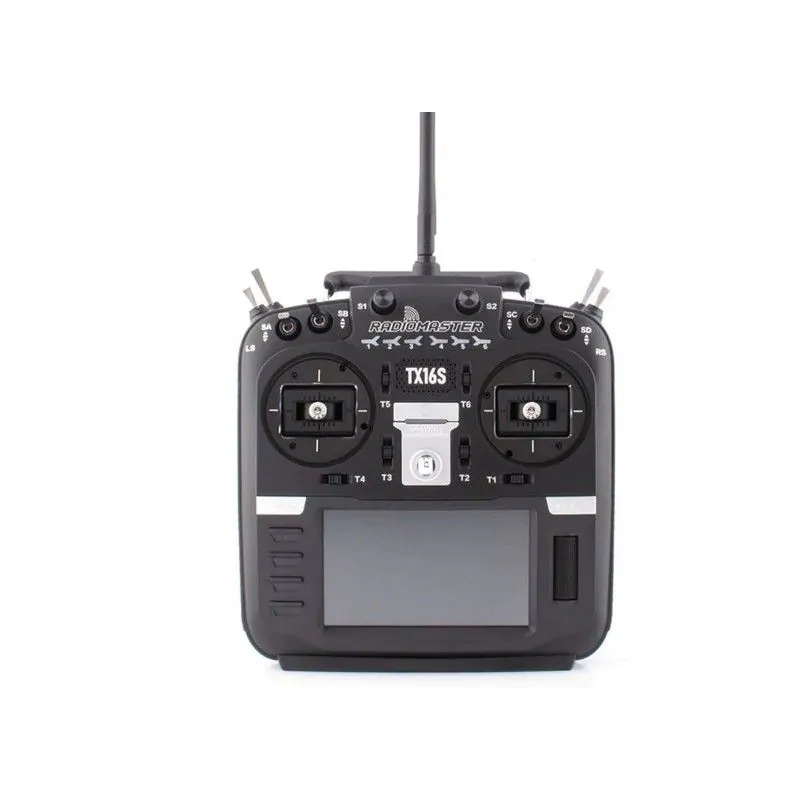
The most common choices are Radiomaster (TX16S, Boxer, Zorro series) with EdgeTX firmware and built-in or modular ELRS, and TBS Tango 2, which has Crossfire built directly into the bottom of the board without the need for an external module. The choice depends mainly on the protocol you have already chosen - the two systems are not compatible with each other.

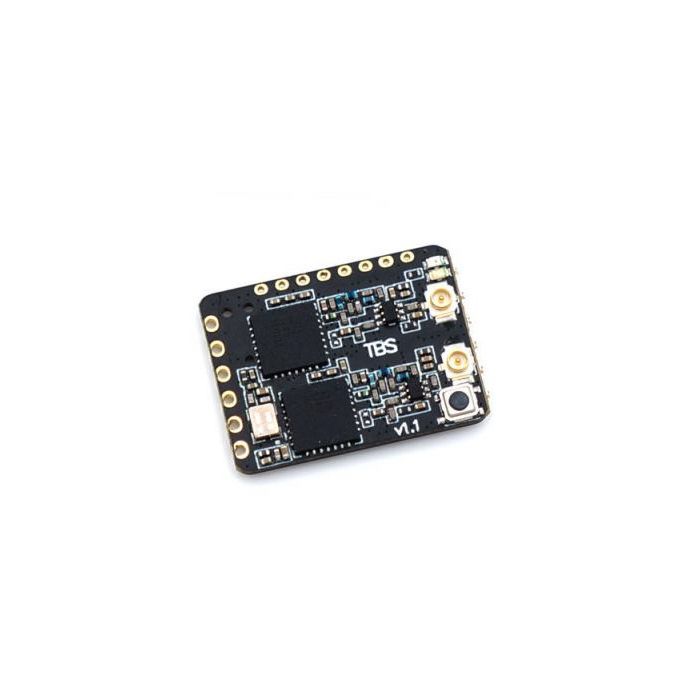
What is the difference between a regular and a diversity receiver?

Diversity receivers have two separate RF antennas/chips for signal reception, which greatly improves reliability around obstacles and turns, as the system selects the better of the two signals in real time. For a standard 5-inch racing or freestyle build, a simple receiver with one antenna is more than enough; diversity receivers are worth it for long distances or flying in urban environments with many obstacles.

Do I need GPS on an FPV drone that doesn't fly long distances?

Yes, it is increasingly becoming a standard component even on ordinary 5-inch freestyle builds, because Betaflight GPS Rescue is a feature that automatically raises the drone to a set altitude and returns it to the takeoff point when video or radio signal is lost — it has saved thousands of drones from getting lost in grass, forests, or water.

Reviews

There are no reviews yet

Be the first to review “AtomRC Swordfish RTH FPV Aircraft”

Your email address will not be published. Required fields are marked *

Shopping cart
Sign in

No account yet?

Create an Account
Product Categories
Follow:
tbi bank loading
please wait
AtomRC Swordfish RTH FPV Aircraft
266,44 €
Would you like us to notify you? We will inform you when the product becomes available. Please leave your valid email address.